 Zambian Mining News The Premium Source of Information on The Zambian Mining Industry




Related Articles

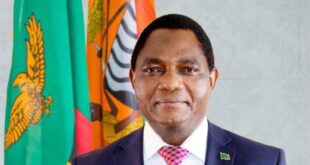
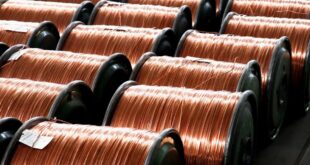
Zambian President Hakainde Hichilema is spearheading a proposal to create a Pan-African minerals and metals exchange, aiming to secure a larger share of the economic value generated by the continent’s vast natural resources.
The initiative is designed to help Africa’s second-largest copper producer and neighboring mineral-rich states retain more output locally for domestic processing and refining, addressing growing domestic pressure to capture value before exporting raw materials.
“The desire of many young Zambians as well as a lot of Africans across the continent is to be greater participants in the minerals that come from their soils,” Jito Kayumba, finance and investment adviser to Hichilema, said by phone. “There’s been growing discontent.”
The initiative marks the latest effort by African governments to assert sovereignty over critical supply chains. Countries including the Democratic Republic of Congo, Guinea, Ghana, and Zimbabwe have rolled out policies ranging from export bans on raw ores to mandatory local refining and increased state ownership in mining operations.
The proposal forms a key pillar of Hichilema’s platform ahead of national elections this month. Should his administration secure a second term, the newly formed cabinet will treat the establishment of the regional metals exchange as an immediate policy priority.
“The actual process to start to engage in this program would essentially commence immediately,” Kayumba said.
The planned exchange would build on Zambia’s existing metals-trading joint venture with Swiss commodity trader Mercuria Energy Group Ltd. A similar 2022 deal between Zambia and Congo to build a cross-border electric-vehicle battery supply chain faltered because neither government had direct rights to the raw copper and cobalt extracted by private concessionaires, according to Kayumba.
To overcome those bottlenecks, Zambia and Congo have both secured offtake agreements from major mines where the state holds minority equity, with Congo entering its own trading arrangement with Mercuria. The resulting state-controlled mineral volumes are expected to supply liquidity for the proposed regional exchange.
Zambia has already presented the proposal to Congo and two other African nations, Kayumba said, declining to name the additional countries.
Despite producing a substantial portion of the critical minerals needed for global energy transition technologies, Africa retains less than 1% of the value generated by clean-energy manufacturing, according to data from the International Energy Agency. Policy analysts note that regional trading mechanisms could give African nations the critical mass required to support domestic processing plants and manufacturing hubs.
Failure to deliver tangible economic opportunities for the continent’s rapidly expanding youth demographic could trigger broader political instability across the region, Kayumba warned.
“Africa will be increasingly unstable if the population of young people continues to rise at the rate that it’s rising, and the economy does not follow suit,” Kayumba said. “Democracy is at risk in Africa because if it does not deliver the dividend that meets the needs of the young people, then people start cheering on what happens in the Sahel.”


