 Zambian Mining News The Premium Source of Information on The Zambian Mining Industry




Related Articles


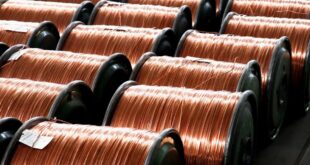
Mining remains a cornerstone of many Sub-Saharan African economies, often contributing a substantial share of GDP. With the global energy transition driving soaring demand for minerals such as cobalt, lithium and copper, Africa’s mineral wealth is attracting renewed global interest. Countries are moving to modernise mining value chains, investing in infrastructure, energy and technology to secure long term, sustainable growth.
Yet, challenges persist. According to Africa focused investment platform AFSIC, mines across the continent face infrastructure gaps, particularly in energy supply, where quality, reliability and availability are constant concerns. At the same time, stricter environmental regulations and corporate sustainability targets are forcing mining companies to lower costs and emissions while sustaining production. Against this backdrop, the sector is exploring battery energy storage systems (BESS) as a solution to chronic power supply issues.
Mining’s Economic Backbone
Across the continent, mining has long been an economic driver. In Mali, reforms in 2023 helped attract investment, with mining expected to add $1.2 billion to the economy in the first quarter of 2025. Ghana’s gold sector accounts for over a third of exports, while other minerals such as manganese, bauxite and diamonds, add further revenue.
In East and Central Africa, the Democratic Republic of Congo is now the world’s second largest copper producer, despite ongoing instability, while Tanzania’s mining sector contributed over 10% to GDP in 2024. In Southern Africa, South Africa’s mines generated R424.6 billion in 2023 and employ nearly half a million people. Zambia’s mining industry provides 15% of GDP, 70% of export earnings and 44% of government revenue, underpinned by rich copper and cobalt reserves.
Why BESS Matters
Mining is energy intensive, with power costs accounting for up to 40% of operating expenses in Africa. Diesel generators, the traditional backup, are costly and polluting. BESS technology offers a cleaner, more cost-effective alternative. A BESS stores energy for later use, charging from the grid or local generation sources such as solar, wind, hydro or generators.
Mines can store excess energy during low demand periods and use it during peak demand or outages. This ensures critical systems including safety, ventilation and essential machinery remain operational even during grid instability. By integrating BESS with renewable generation, mines can cut reliance on coal-fired grids and reduce diesel consumption, lowering emissions and operating costs. The technology also improves grid stability, manages harmonic distortion and smooths inconsistent power feeds, issues common in remote mining regions.
Driving a Sustainable Transition
The shift toward renewable energy is intensifying demand for minerals such as copper, cobalt, lithium and nickel,which are all abundant in Africa. Meeting this demand requires reliable, low-carbon power infrastructure in mining regions. BESS technology could be a game changer, bridging the gap between current energy limitations and the operational needs of modern, sustainable mining.
Vertiv’s BESS solutions are already showing results in remote African mining operations, supporting power stability, reducing fuel dependency and aligning with global sustainability goals.
Vertiv will showcase its Vertiv™ EnergyCore Grid BESS for mining, data centres and critical infrastructure at the C&I Energy & Storage Summit Zambia 2025, taking place on 27–28 August at The Pamodzi Hotel in Lusaka, where the company is a bronze sponsor.
By Henry Myburgh, Strategic Account Manager, Vertiv Africa


