Zambian Mining News The Premium Source of Information on The Zambian Mining Industry



Related Articles


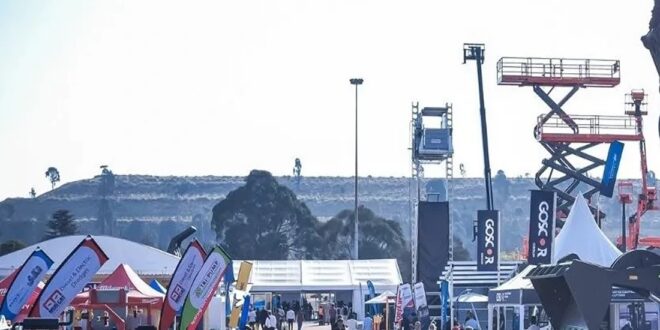
A new exhibition platform aimed squarely at the continent’s energy buyers was unveiled in Johannesburg, South Africa on 9 September 2026 and the message from the podium was unambiguous. Electricity is no longer a line item to be managed quietly in the background. It has become a board level concern that is reshaping how mines, manufacturers and infrastructure operators plan for growth.
Montgomery Group Africa used the opening morning of Electra Mining Africa 2026 to launch PowerEx 2028, a dedicated commercial and industrial energy platform that will run alongside Electra Mining Africa 2028 when the two events return to the Nasrec Expo Centre. The launch event, held at the MAN Building, drew energy providers, regulators and industrial buyers into one room for a panel discussion that laid bare both the scale of the crisis facing African industry and the commercial opportunity now opening up around it. The numbers set the tone for the launch.
Electricity prices across parts of the region have climbed by as much as a 1000%, according to figures presented at the event, with panellist Andrew Taylor, Co-Founder and Head of Trading at NOA Group, citing an increase closer to 900% in his own remarks on regulation and competitiveness. Behind those figures sits an infrastructure programme of extraordinary scale, with 14 000 kilometres of new transmission lines in the pipeline and roughly four hundred and forty billion rand in coordinated infrastructure investment required to bring it to life. Taylor described the scale of capital deployment needed as a defining challenge for the sector, alongside persistent constraints on access to reliable market information and the practical difficulties of building transmission corridors fast enough to keep pace with demand.
For organisers, the case for a platform like PowerEx rests on a simple observation. Even a strong energy solution can stall commercially when the technical, operational and financial decision makers inside a mining or industrial buyer are reached separately rather than together. PowerEx is being positioned as the meeting point where those groups can be reached at once, where buyers can compare procurement options, and where energy providers can build the credibility needed to convert relevance into contracts. That shift toward choice and competition ran through the panel discussion. South African Independent Power Producers Association (SAIPPA)’s Mary-Joy Masetlane, spoke to the decentralisation now underway in the market, noting that independent power producer models are evolving away from the traditional single supplier arrangement. She described a future in which the industrial customer becomes an active participant with more choices and more competitive pricing, provided the sector can deliver reliability alongside that competition. Collaboration between government, developers and off takers will be essential, she said, particularly on transmission projects, wheeling arrangements and the implementation of supporting policy frameworks.
Business Unity South Africa (BUSA)’s Head of Energy and Environment,Rosalind dos Santos extended that theme toward the export market, telling delegates that customers will be able to access the cheapest available electricity by 2030. She distinguished between financial and technical barriers facing new entrants and pointed to the growing importance of differentiation through greener and renewable power for exporters seeking to remain competitive, while flagging the ongoing challenge of managing price volatility for buyers along the way. The Chairperson of the Energy Intensive Users Group (EIUG) and Head of the Renewable Energy Portfolio at Sibanye Stillwater, Murendeni Matshinyatsimbi brought the discussion back to hard grid numbers. He confirmed that 700 megawatts of grid access is currently in operation, with a further 240 megawatts due to be added before the end of 2026. He noted that his company is an early mover which secured grid access ahead of competitors that are already positioned to benefit as capacity tightens.
In closing the panel, Taylor, returned to the practical mechanics of a market in transition, describing the wheeling mechanism and the power purchase agreement as the tools buyers now need to manage uncertainty and calling for both technological and contractual flexibility as the sector moves through what he characterised as a genuine risk bridge between the old, centralised model and a more open one. For an industry that has spent the past several years absorbing extraordinary cost increases, the message from PowerEx 2028’s launch was ultimately one of cautious opportunity. The buying group is looking for answers, the infrastructure is being built to support new options and a market once defined by a single supplier is being pulled, deliberately and at scale, toward genuine competition.