Zambian Mining News The Premium Source of Information on The Zambian Mining Industry



Related Articles

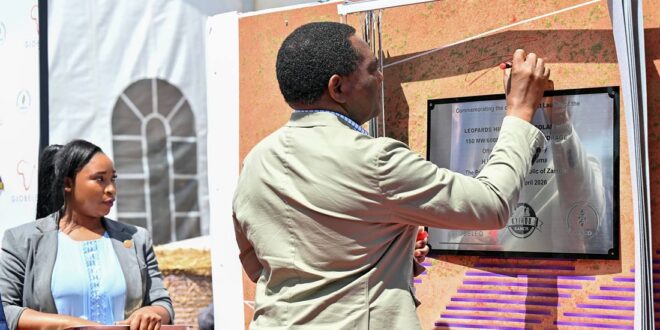
The Zambian government has taken its most significant single step yet towards energy diversification, with President Hakainde Hichilema officiating at the launch of the Leopards Hill Solar and Battery Storage Project, a development that combines the country’s largest solar plant with its first utility-scale battery storage system.
The project, developed by Globeleq, pairs a 250 MWp solar photovoltaic plant with a 150 MW / 600 MWh battery energy storage system, designed to strengthen grid stability, support peak demand management and provide energy equivalent to the annual electricity consumption of approximately 150,000 households. Located roughly 25 kilometres southeast of Lusaka near Kyindu Ranch in Lusaka Province, it represents a landmark in Zambia’s push to reduce its dependence on hydropower and build a more resilient national energy mix.
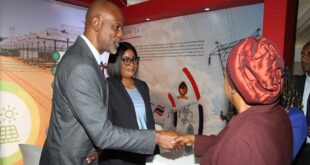
On the sidelines of the launch, Globeleq and ZESCO signed the Grid Connection Agreement for the project, securing export capacity and reinforcing the partnership with the national grid operator. Financial closure is targeted for the end of 2026, with peak construction expected to create between 200 and 250 employment opportunities for local Zambians. Hichilema reaffirmed the government’s commitment to clean and reliable energy infrastructure, noting that projects of this scale are critical to unlocking economic growth, supporting industrialisation, and improving the quality of life for all Zambians.
Globeleq CEO Jonathan Hoffman said the project reinforces the company’s broader Zambia strategy. “Combined with our investment in LHPC, the Leopards Hill project strengthens our ability to offer tailored power solutions to major customers in the country and the region. Globeleq is building a balanced and flexible platform that supports the country’s long-term energy strategy and enables sustained growth in the local mining sector. The Leopards Hill project strengthens Zambia’s energy system and expands the opportunities for private sector offtake in a rapidly growing market,” noted Hoffman.
In addition, the British High Commissioner Rebecca Terzeon remarked that the project demonstrates the value of responsible international investment partnerships. She said, “The United Kingdom is proud to support Zambia’s vision for a cleaner, more resilient energy system. Projects like Leopards Hill demonstrate how strong partnerships between government and responsible UK-linked investors can unlock sustainable growth and expand access to reliable power. The UK remains committed to working with Zambia to mobilise climate-smart investment, strengthen energy security, and advance a just and inclusive transition.”
The project is being developed in partnership with Leopard Investment Company, one of Zambia’s oldest agricultural businesses, which has farmed the land for generations and already hosts the Leopards Hill Substation. Chairman Carl Irwin said the transition from farming to energy production carries deep significance. “As Zambians, we are proud to play a role in bringing a world-class renewable energy project to our country. Having farmed this land for generations, we are now privileged to harvest the power of the sun, contributing to clean energy and supporting Zambia’s economic growth,” shared Irwin.
Globeleq, owned by British International Investment and Norway’s Norfund, opened its Lusaka office in 2025 and holds a 51% stake in the Lunsemfwa Hydro Power Company. Its 56 MWp Kafue Solar project is nearing financial close under the GET FiT Zambia programme. Zambia is a key growth market for the company as it expands its presence across southern Africa and deepens its participation in the Southern African Power Pool.