 Zambian Mining News The Premium Source of Information on The Zambian Mining Industry




Related Articles
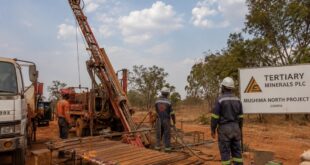


Across Africa’s mineral belts from Zambia’s bustling copper heartlands to Ghana’s gold fields the legacy bargain between host states and foreign mining conglomerates is unraveling. Governments are no longer content with serving merely as raw material exporters in a “pit-to-port” model. Instead, as the global energy transition elevates copper, gold, and critical minerals into high-stakes strategic assets, nations are leveraging their geological wealth to demand local equity, in-country processing, and deeper economic sovereignty.
Zambia has emerged as a bellwether for this continental shift. As Africa’s second-largest copper producer, Lusaka has aggressively overhauled its regulatory and fiscal framework, deploying its state investment arm, ZCCM-IH, alongside strict local ownership quotas and value-addition mandates to capture a larger share of global supply chain revenues. With copper surging toward historic highs, Zambia’s assertive stance demonstrates a growing conviction among African capitals: if the world places a premium on their resources, yesterday’s concessionary terms are no longer valid.
That same friction is now playing out in Accra, where the Ghanaian government is locked in high-stakes negotiations over the lease renewal for Gold Fields Ltd.’s flagship Tarkwa gold mine. Publicly, Ghanaian officials have maintained deliberate ambiguity over whether the South African miner will secure an extension, using the leverage to extract stronger local procurement, deeper skills transfer, and domestic ownership commitments.
“It won’t be business as usual where we just automatically renew the lease,” said Isaac Andrews Tandoh, head of Ghana’s Minerals Commission, signaling that automatic roll-overs for multi-billion-dollar extraction concessions are officially a thing of the past.
The Fine Line Between Sovereignty and Capital Flight
The aggressive bargaining push highlights a wider regional recalibration stretching across Zambia’s copper, Namibia’s critical minerals, and Botswana’s diamond trading. Yet market analysts warn that governments face a delicate balancing act between legitimate resource nationalism maximizing national benefits from domestic minerals and investment nationalism, which risks alienating globally mobile private capital.
Ghana’s recent reallocation of the nearby Damang mine to local contractor Engineers & Planners, after Gold Fields deprioritized the asset, rattled foreign investors who feared a broader push toward expropriation. Replacing an operator at a asset as sophisticated as Tarkwa, however, carries vastly different operational risks. Tarkwa accounts for nearly one-fifth of Gold Fields’ global production, and the company has already signaled a willingness to comply with local content rules alongside a new long-term capital commitment.
“There is an important distinction between resource nationalism and investment nationalism,” noted a senior African mining analyst. “The former seeks to maximize national benefit from natural resources, while the latter risks discouraging the very capital needed to unlock that value. Confusing the two would be an expensive mistake.”
For Zambia, Ghana, and their peers, the ultimate challenge is proving that national ambition and investor predictability are not mutually exclusive. As global miners compete for finite reserves, the countries that thrive will be those that negotiate firmly without governing arbitrarily demonstrating that policy credibility remains as essential to mining returns as geology itself.


