Zambian Mining News The Premium Source of Information on The Zambian Mining Industry



Related Articles



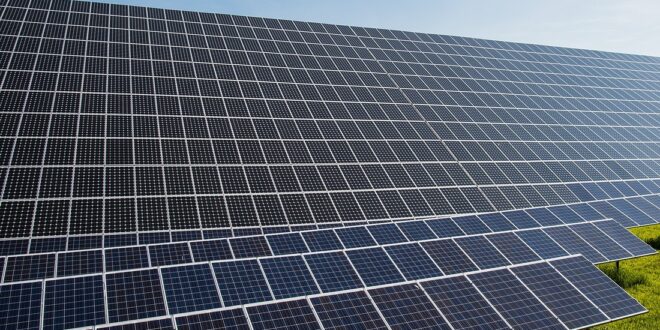
Zambia has signed contracts with five contractor consortiums to build 312MW of solar capacity spread across all 156 parliamentary constituencies, marking one of the most geographically ambitious power rollouts the country has attempted and one designed to solve two problems at once: chronic electricity shortages and stalled irrigation-driven agriculture.
The ZMW4.3 billion (US$234,979) Presidential Constituency Energy Initiative (PCEI) will see 2MW solar plants built in each constituency, with every project connecting to the national grid operated by ZESCO. Contracts were awarded to five consortiumsnamely, Sunshare Construction with China Railway Construction Engineering Group, China Civil Engineering Construction Corporation, Golden Baobab Investments with Huawei Technologies Zambia, Chetam Metals Fabrication with ZamChin Construction Company and China Jiangxi International Corporation with Qingdao Haier Photovoltaic New Energy Company, a contractor mix that pairs Chinese state engineering firms with Zambian and technology partners on nearly every consortium.
According to the Ministry of Local Government and Rural Development, the projects are scheduled for completion within 12 months and expected to generate around 15,600 construction jobs. Cabinet approved the programme in November 2025, adding 312MW to a national electricity system that has faced persistent supply shortages in recent years. Permanent Secretary for technical services Nicholas Phiri framed the initiative as tightly integrated with Zambia’s broader development targets rather than a standalone power project. “The PCEI is directly aligned with Zambia’s broader macro-economic and developmental goals. By integrating these solar assets into the national grid, the initiative supports the long-term target of expanding Zambia’s power generation capacity,” noted Phiri.
The revenue model extends beyond the grid itself.Phiri explained, “Local authorities will also share equity in the plants, generating a sustainable revenue stream to support community development.The achieved energy target of ten million megawatts will enable an all year-round crop cultivation through irrigated agriculture and in turn directly support the National target of ten million metric tonnes of maize.” The programme will be managed through a special purpose vehicle spanning the ministries of finance, local government and energy, with ZESCO overseeing project management, technical standards and grid integration. Speaking on behalf of the contractors, China Civil Engineering Construction Corporation Southern Africa Managing Director Jacques Lioa confirmed the projects would be delivered within the agreed 12 month construction window.
With Zambia balancing an IMF-guided fiscal recovery with urgent infrastructure needs, the PCEI’s structure, equity-sharing local authorities, grid-connected generation and an explicit link to irrigated maize output, it signals an attempt to make new power capacity pay dividends across multiple sectors simultaneously, rather than treating electricity generation as an isolated investment