Zambian Mining News The Premium Source of Information on The Zambian Mining Industry



Related Articles



As the global race for copper intensifies, two African nations are emerging as indispensable players and the implications stretch well beyond the continent’s mining sector. The Democratic Republic of Congo (DRC) and Zambia are consolidating their positions at the heart of the global copper supply chain, underpinned by vast reserves, ambitious production targets and a growing recognition that the Central African Copperbelt is not simply a regional asset but a strategic global one.
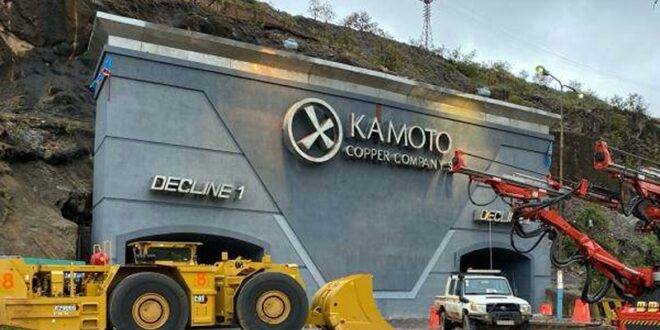
A report by Visual Capitalist places the DRC among the world’s top four countries for copper reserves, making it the largest holder on the continent. The country is also deepening its industrial influence through new commercial partnerships including a deal between state miner Gécamines and Kamoto Copper Company, a major operation linked to Glencore. Zambia is moving with equal intent. The country is targeting copper output of over one million tonnes by 2026 and has set an ambition to triple production to three million tonnes by 2031, backed by a concerted effort to attract large-scale international investment. Projects such as KoBold Metals’ Mingomba development and the expansion under way at Lumwana reflect the scale of capital now flowing towards that target.
The global copper picture provides the context. Total known reserves are estimated at around 980 million tonnes but supply is heavily concentrated with Chile alone holding approximately 180 million tonnes, nearly double the next largest holder, with just five countries controlling more than half of known global supply. That concentration makes the DRC and Zambia’s combined Copperbelt position strategically significant in ways that extend beyond Africa. Copper’s role in the global economy has also fundamentally shifted. Once primarily a construction and industrial metal, it is now essential infrastructure for electric vehicles, renewable energy systems, power grids and artificial intelligence data centres.
As global electrification accelerates, demand is climbing sharply whilst supply is becoming structurally more challenging to grow. Ore grades are declining globally, new discoveries are harder to develop and the cost of extraction is rising. That combination places the DRC and Zambia at the centre of one of the defining supply chain questions of the energy transition era, whether the world can produce enough copper, quickly enough, to meet the demands of a decarbonising economy. For the two countries anchoring Africa’s Copperbelt, the moment represents an opportunity of historic proportions, provided the investment, governance and infrastructure required to realise it can be assembled at the pace the market demands.